






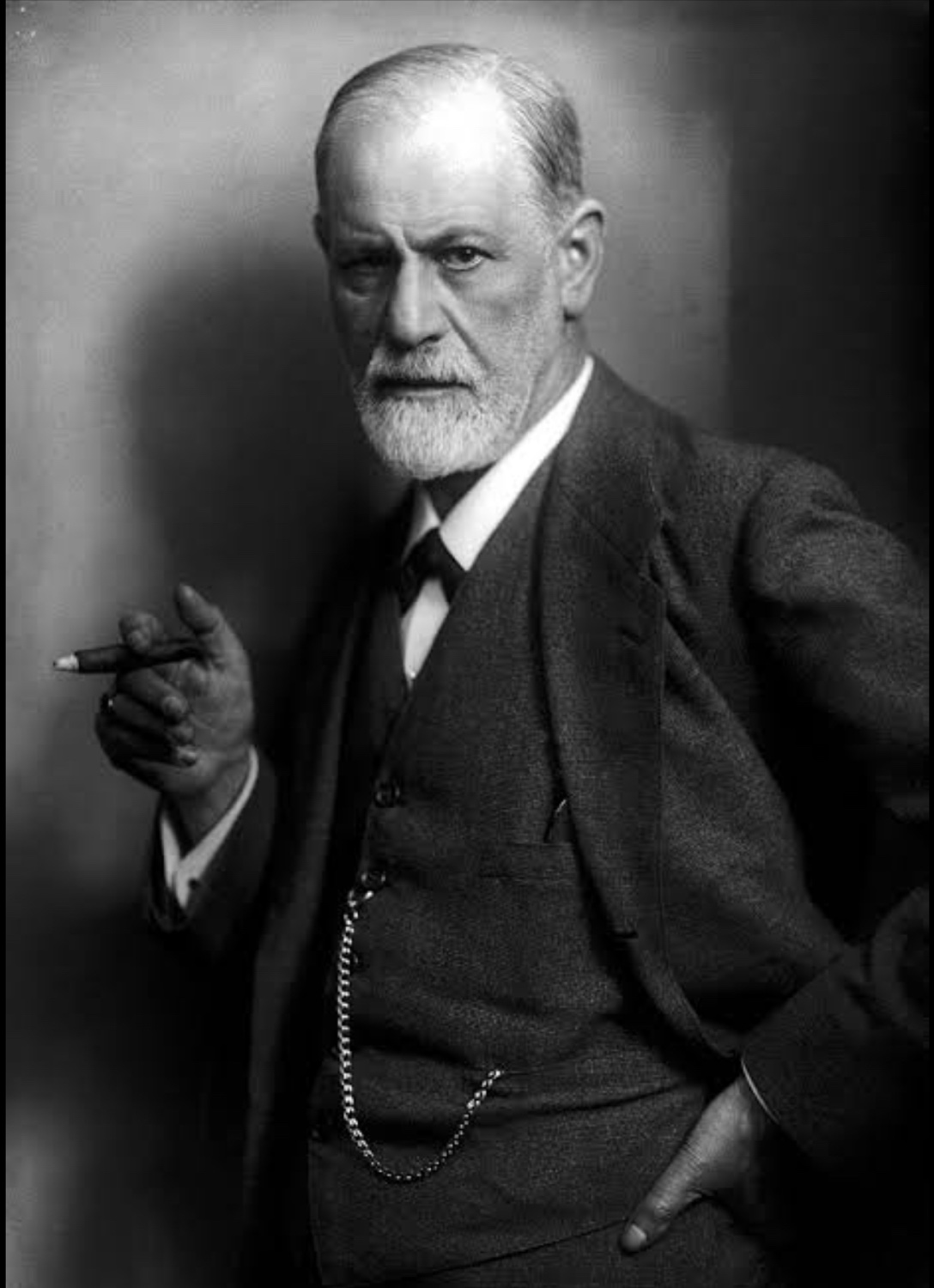
“From error to error, one discovers the entire truth.”
Sigmund Freud
Called ‘The Master of Psychoanalysis’ , Sigmund Freud was an Austrian Neurologist best known for inventing and developing the technique of psychoanalysis. he deduced 3 theories about the human psyche (personality) ; to sum it up , the theory promotes the ideology that people have thoughts, memories, desires which they are unaware of and that therapy should be used to access the mind’s repressed experiences through talk therapy. But was he correct?
To get a better understanding of Freud, let’s delve a bit deeper into his theories. Freud believed that people developed through a series of phases – the id, the ego and the superego (each developing in a different stage of life) – and that humans had a conscious, an unconscious and a preconscious mind. He found that when some memories were often too frightening for his patients they locked this information away in the unconscious mind.
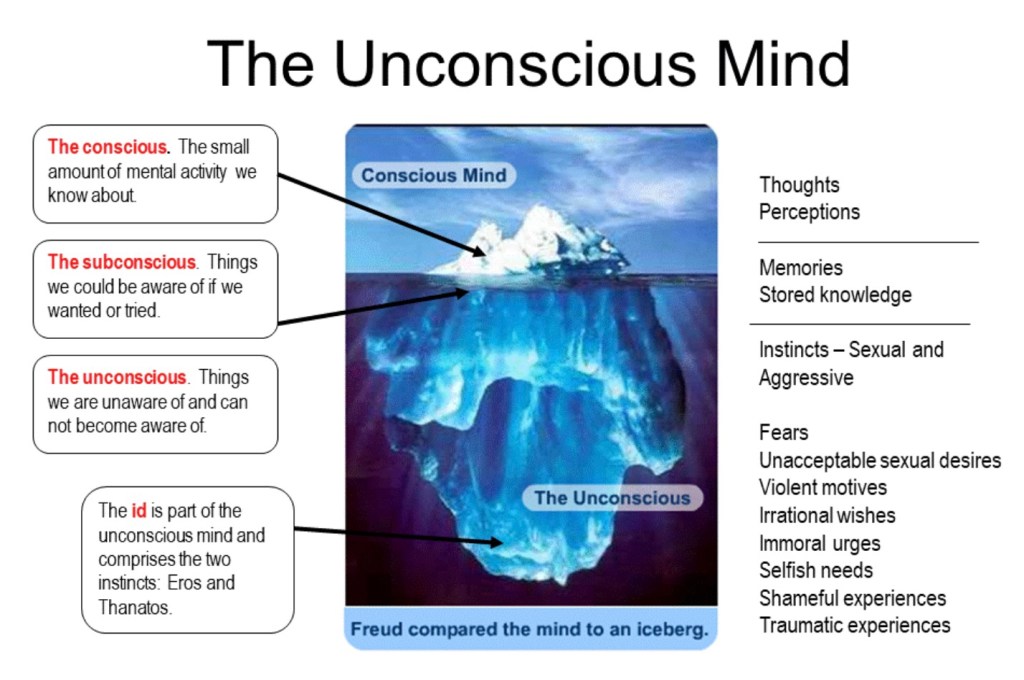
Freud assumed the ID operated at an unconscious level according to the pleasure principle (gratification from satisfying basic instincts). The id comprises two kinds of biological instincts (or drives) which Freud called Eros and Thanatos.
Eros, or life instinct, helps the individual to survive; it directs life-sustaining activities such as respiration, eating, and sex (Freud, 1925). The energy created by the life instincts is known as libido.
In contrast, Thanatos or death instinct, is viewed as a set of destructive forces present in all human beings (Freud, 1920). When this energy is directed outward onto others, it is expressed as aggression and violence. Freud believed that Eros is stronger than Thanatos, thus enabling people to survive rather than self-destruct.
The ego’s goal is to satisfy the demands of the id in a safe a socially acceptable way. In contrast to the id, the ego follows the reality principle as it operates in both the conscious and unconscious mind.
The superego develops during early childhood and is responsible for ensuring moral standards are followed. The superego operates on the morality principle and motivates us to behave in a socially responsible and acceptable manner.
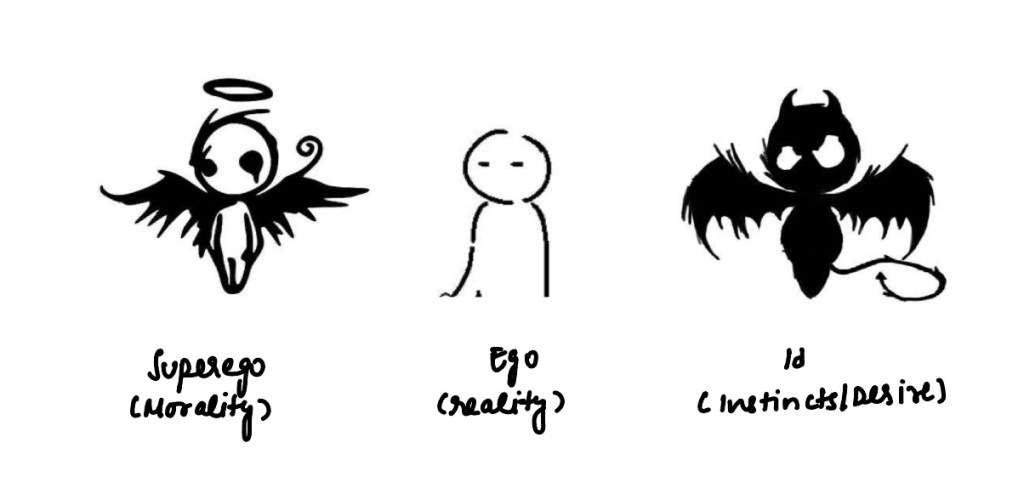
The basic dilemma of all human existence is that each element of the psychic apparatus makes demands upon us that are incompatible with the other two. Inner conflict is inevitable.
Freud believed that children were born with a sexual desire and went though a no. of phases during childhood. If any of these stages were skipped out or not completed properly, they could develop ‘Mental Abnormalities’. He believed that the adult personality was derived from the experiences of one’s childhood.
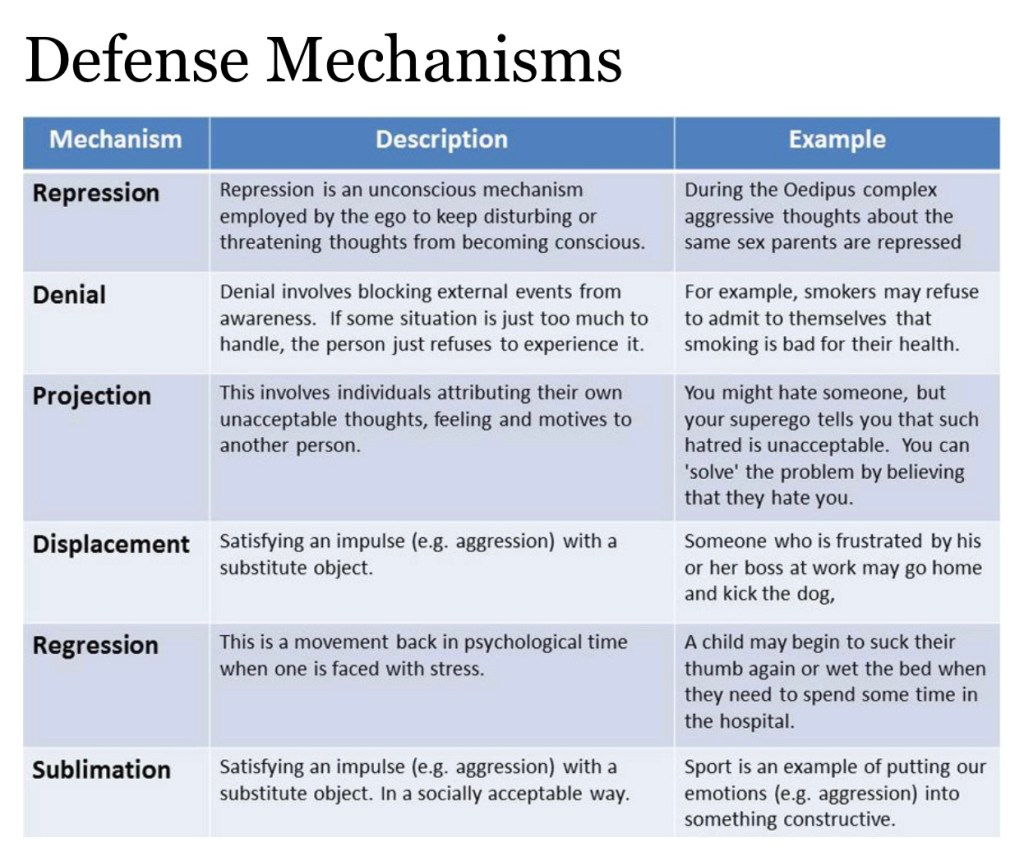
Freud’s research isn’t believed to be a credible source as they are mostly based on the unconscious mind which is hard to test and thus lacks scientific evidence. his theories fail to realize the ability to change ,i.e, the plasticity of human behaviour.
There are many on the field of psychology who have disagreed with Freud’s theories. Carl Jung an influential psychologist initially held belief in his theories but slowly departed from the believer’s club. Alfred Alder, Karen Horney and Erik Erikson too were vary of Freud’s theory. They have been referred to as Non-Freudians as their belief is more inclined towards the personality developing based on the social and cultural environment surrounding a person rather than focusing on sexual or aggressive motives for behaviour like Freud.





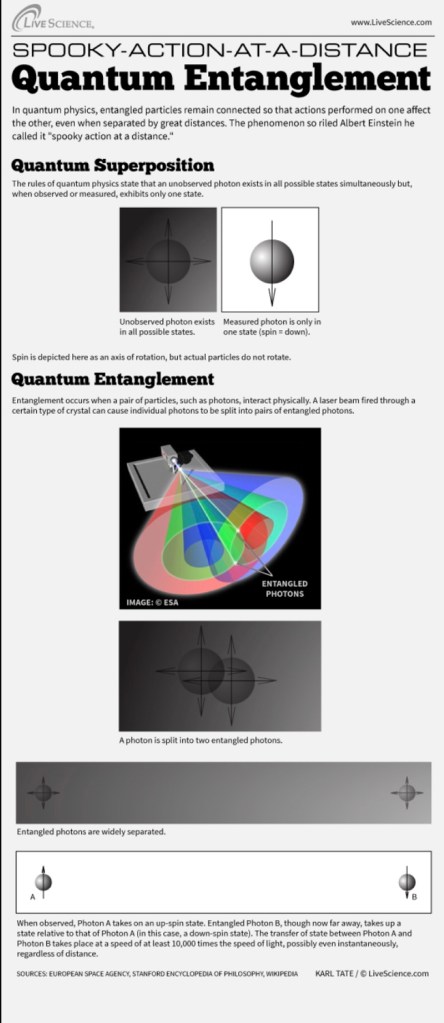
When particles interact with each other they may become entangled,i.e, they may become connected even if they are separated by a large distance such that an action done on one affects the other.
China’s Micius Satellite which was solely dedicated to quantum information science was launched last year to transmit the entangled photon pairs.
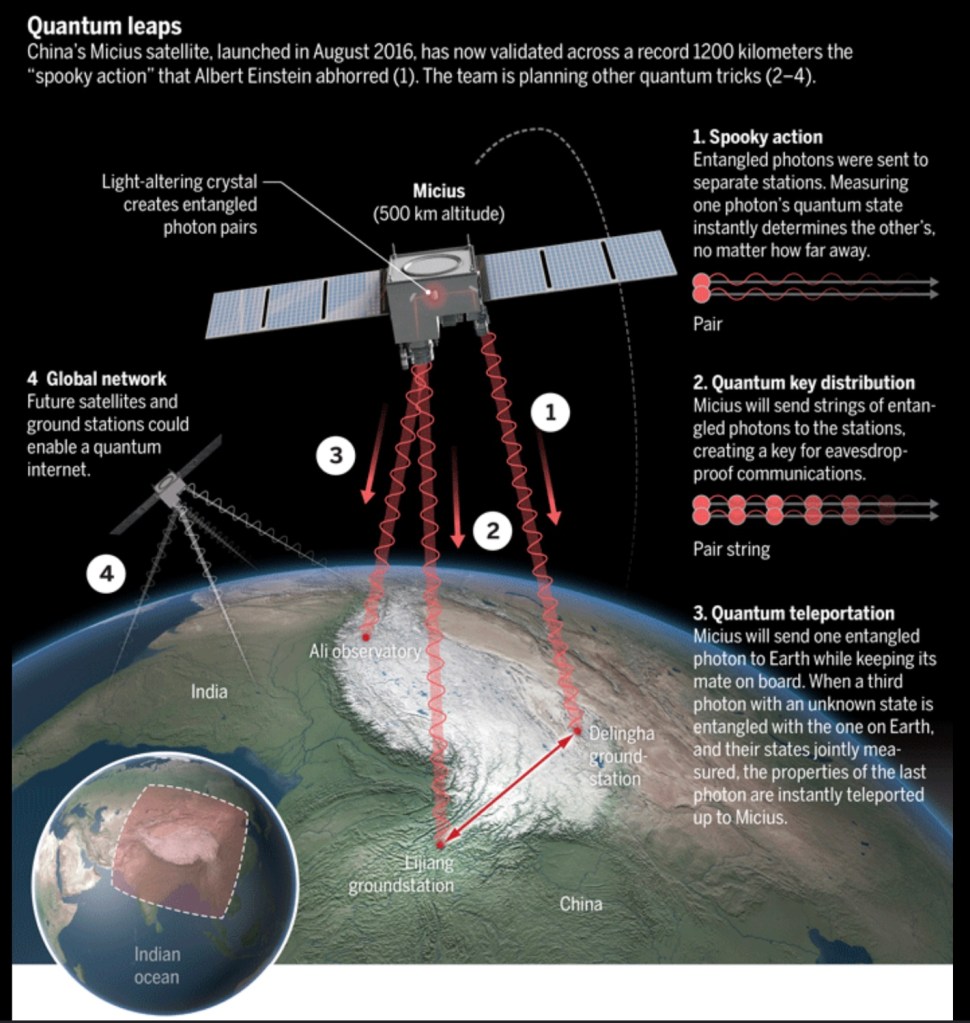
Once the photons transmit to ground stations there was still connected despite travelling far and wide(1600-2400kms). The system used by the satellite has marvellous applications : it can be used for quantum key distribution which creates quantum quantum communication system which allows sharing of information between two parties which is impossible to intercept without alerting the users. Experts say that this system is on crack about even if in cryptic messages are sent over normal communication channels.
China’s scientists have set a new high creating a record for the longest quantum teleportation. In an experiment by the team led by Ji-Gang Ren at the University of science and technology in Shanghai , they fired laser beams carrying the entangled photons from the ground station to the satellite then entangling them with a third photon and measuring their quantum states (not revealing the states but checking if they were the same).
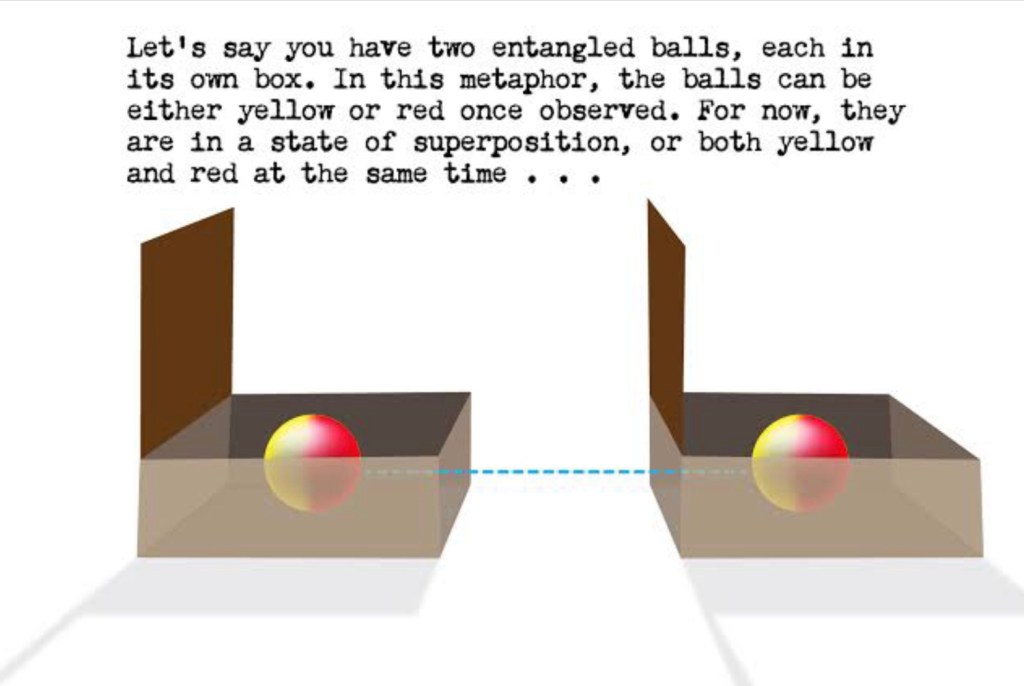
Quantum states are detectable but according to laws of quantum mechanics once you have observed a particle it changes which could be a great security measure, it has helped us transfer data to space which is a great feat. Particles just mimic each other over a distance when entangled Einstein called it ‘spooky action at a distance’.
For more information:
https://www.space.com/37506-quantum-teleportation-record-shattered.html
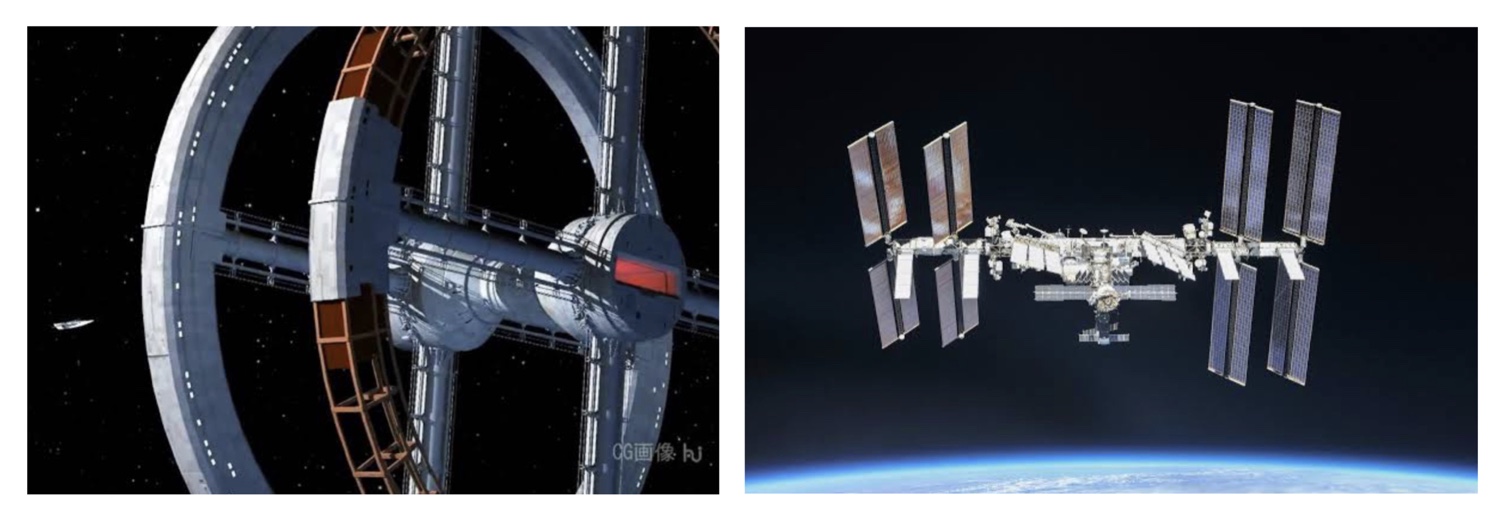
Invention credited to Martin Cooper of Motorola. He made the first-ever handheld mobile phone in 1973 called the Motorola DynaTac which weighed at 2 kgs. In an interview in 2015, Cooper mentioned that the inspiration for this creation to the Dic Tracy comics in which a character used a device called the ‘ wrist two-way radio ‘.
2. Holograms
In the 1977 Star Wars, Obi-Wan Kenobi received a holographic message leading to the iconic scene, ‘Help me Obi-Wan Kenobi, you’re my only hope.’ Recently at the Bringham Young University in Provo, Utah an electrical engineering professor and hologram expert Daniel Smalley and his group created something similar.
He said,’ It’s not a hologram. A 3D image that floats in the air, that you can walk all around and see from every angle, is called a volumetric image.’
His team has managed to create such 3D images which can float around in the air.
3. Digital Billboards
Andrew Phipps Newman the CEO and co-founder of the company DOOH Advertising assumed inspiration from the famous 1982 sci-if movie Blade Runner. In the movie was a scene when, while scanning the skyscrapers appeared a dynamic billboard on one of the buildings.
Newman’s company is created in 2013 has since been dedicated to this digital advertisement format of a billboard. DOOH (Digital Out-Of-Home) media is the term that refers to any digitized display advertising that appears in a public environment. This includes digital billboards, outdoor signage, and networked screens found in even businesses-oriented gatherings areas such as stadiums, malls, and hospitals.

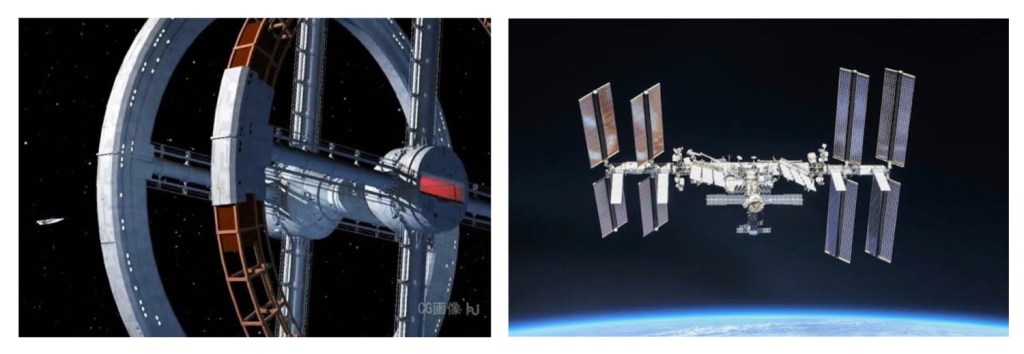
4. ISS
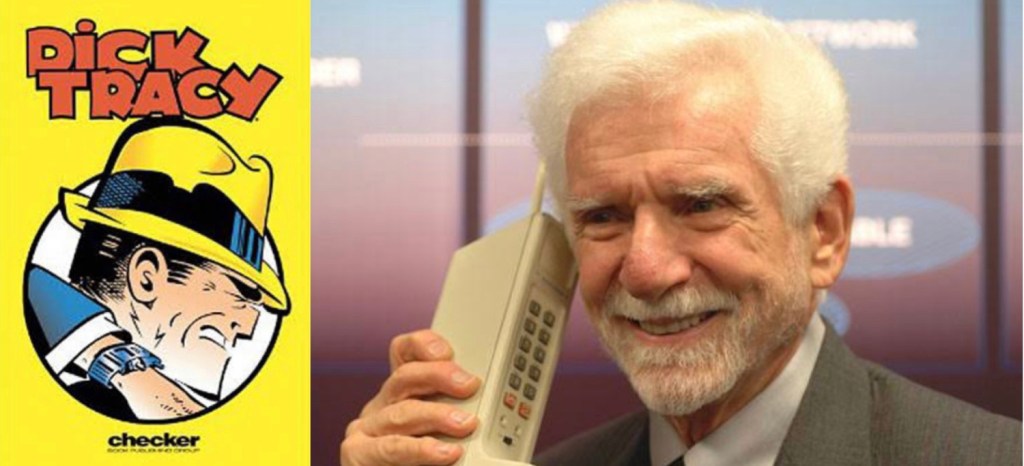
In the movie 2001: A Space Odyssey, released in 1968, there has been a space station established on the lower earth orbit where astronauts could stay and research in microgravity. This was the inspiration that lead to the creation of the international space station in 1998.
5. Tablets
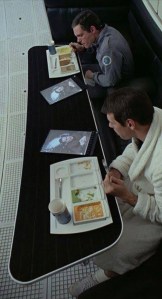
Also in 2001: A Space Odyssey, David Bowman appeared using a sort of flat-screen computers for watching news updates and reading popular periodicals. This was the idea of Stanley Kubrick who called it the ‘Newspad’. He stated it was a device meant to access news related stories and such.
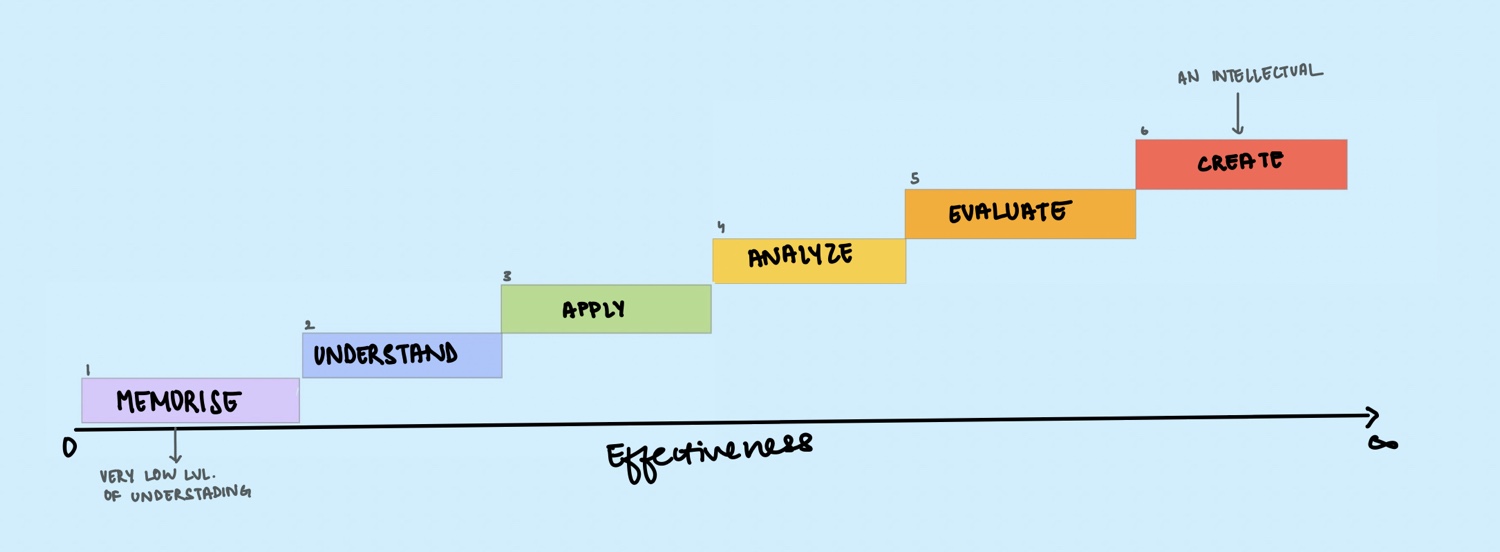
Out of all the methods of consuming information, the most efficient ones are towards the higher end, i.e, 4, 5 & 6. Those of the least efficiency lie at the bottom, i.e, 1,2 and they are also the methods most of us use while studying.
Much research shows that applying and evaluating content makes the information stick and helps us understand more when compared to spoon-feeding the information to yourself at hours without an end.
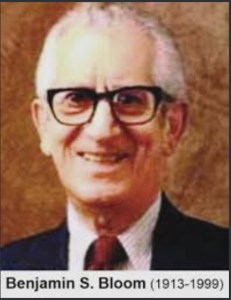
Bloom’s Taxonomy was named after the psychologist Benjamin Bloom, who along with his team of members researched several factors and what impact they had on learning.
Since Bloom’s Taxonomy pushes us to use higher cognitive thinking, it tends to further our understanding of content via problem-solving, evaluation and deliberation.
Bloom’s Taxonomy has been the base of many philosophies that involve application of knowledge. It emphasizes critical thinking and exercising our understanding and our ability to grasp information to engage ourselves more with the content. For example, solving HOT’s questions is a tactic used in textbooks to check our capacity to apply our learnings.
Similar to most studying methods, the efficiency of Bloom’s Taxonomy as a method of teaching varies from person to person. It highlights the importance of higher-level learning and makes the lower levels seem inefficient or unnecessary. But, in some fields such as forensic sciences, mechanical engineering, medical sciences, etc…. the lower levels of learning such as memorizing play an important role.
Bloom’s method emphasises the application of knowledge and promotes a deeper understanding of a concept as a method of learning before introducing the concepts to the student. But this method is more inclined to support fields that depend more on problem moving such as Research, Law enforcement, Business, etc.
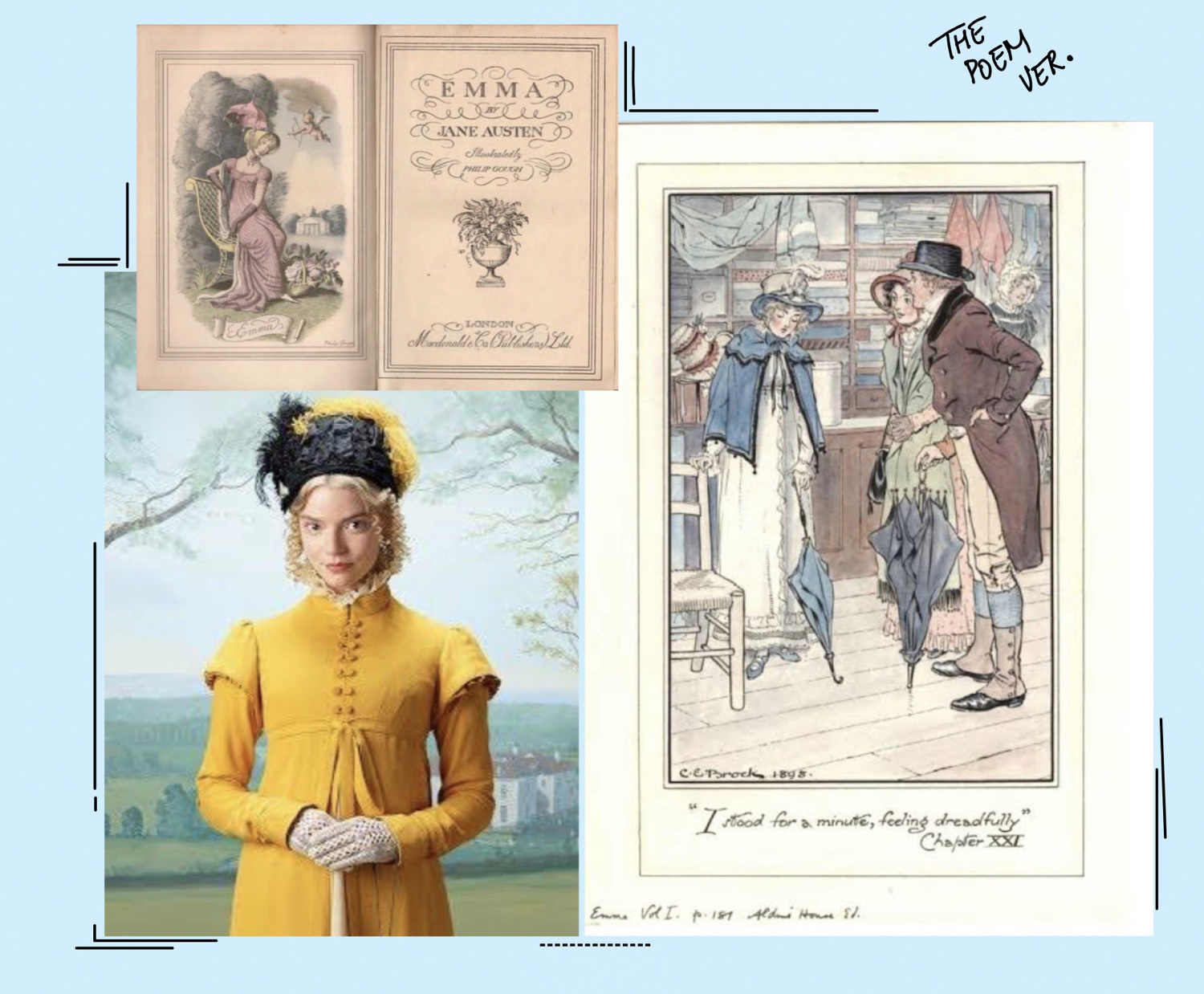
I have just recently started reading Emma- by Jane Austen and as I made through the first 100 pages of the book an idea popped up in my mind.
It might be a little too spontaneous for me to do this considering I haven’t finished reading the book but how wonderful would it be if I gave the book review in the form of a poem.

While reading Emma, when I thought of her character ( in the first 100 or so pages), this poem is what could best encapsulate my opinions of her.
I was always more interested in others affairs than my own
Guessing which event would lead to what occasion
Which sir would fall for which woman
You could call it blind luck
But even a gamble requires some thought

                                                                                              ~emma
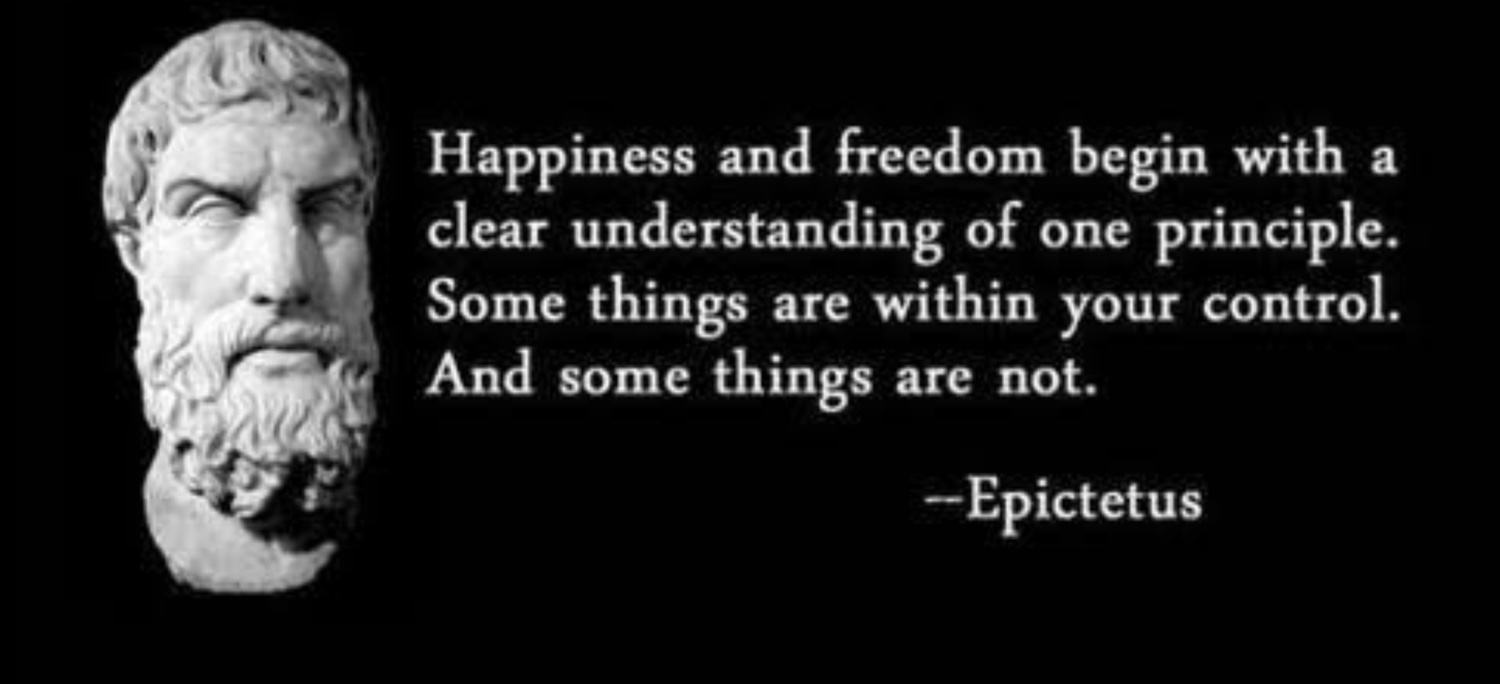
The word ‘Stoic’ is often used to describe someone who is unemotional or indifferent to things. But its origin story says a bit different about the word. Stoics aimed to transform and enable themselves to develop a clear judgement and a calm mind through self-control, modesty and discipline.
“All you need are these: certainty of judgment in the present moment;
action for the common good in the present moment;
and an attitude of gratitude in the present moment for anything that comes your way.”
—MARCUS AURELIUS, MEDITATIONS, 9.6”
Stoicism was based upon the philosophy – ‘Virtue is sufficient for happiness’ According to the principles of stoicism, one is considered truly free only if they are void of any moral corruptions and can stay resilient through harder times.
The four pillars of the Stoic philosophy are:
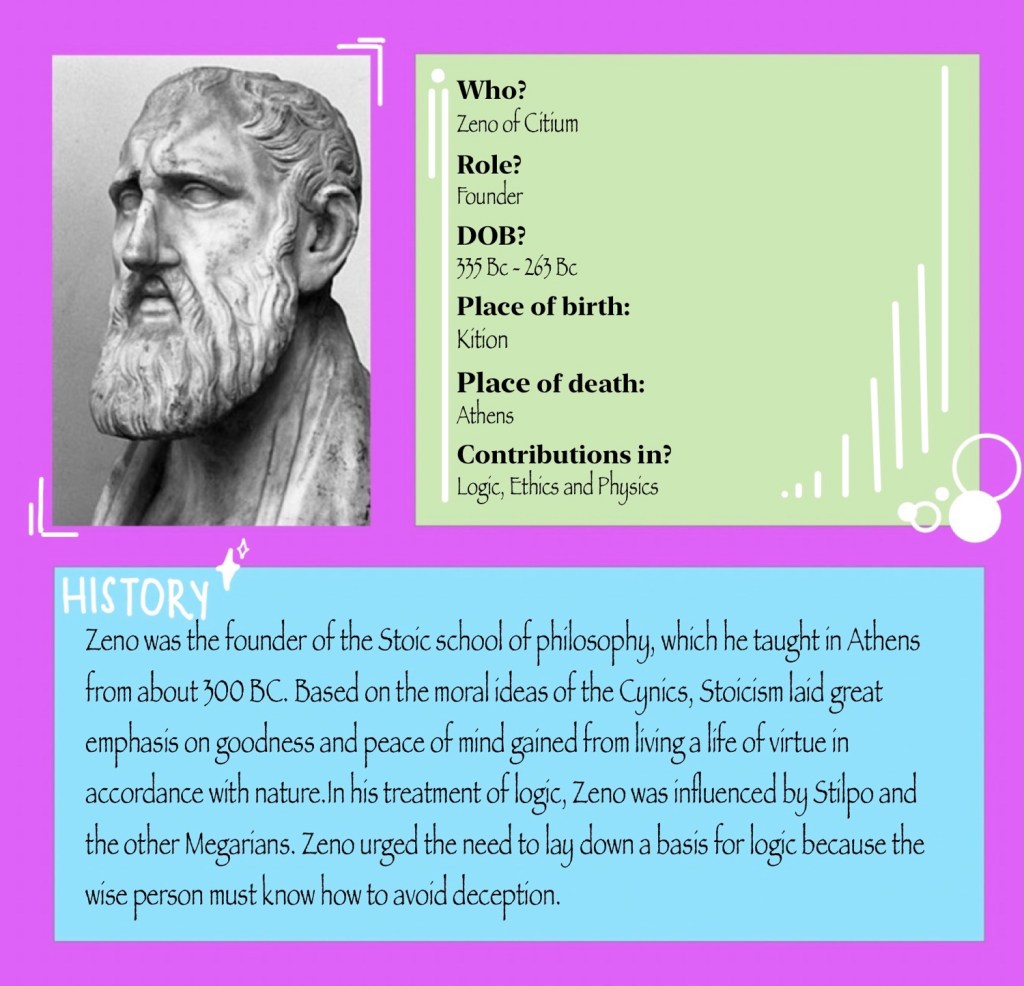
The objective of Stoicism was to be free of suffering by countering them with logic and reason. They believed that emotions which arose from incorrect judgement were vicious. They believed that clarity could only be obtained if one faced the world with a rational mind.
“The proper work of the mind is the exercise of choice, refusal, yearning, repulsion, preparation, purpose, and assent. What then can pollute and clog the mind’s proper functioning? Nothing but its own corrupt decisions.”
—EPICTETUS, DISCOURSES, 4.11.6–7”
I only recently came to know about Stoicism when I was doing a movie-making project about upholding ethics, but I found much to learn from it. I watched a few videos about it and one of the books which were recommended in them was -‘ The Daily Stoic’ by Ryan Holiday if you are looking for a modern approach, but you could just as well read the old texts written by the stoic philosopher such as:
“Truth is found in simplicity, not in the multiplicity and confusion of things.”
-Issac Newton
“Everything should be made as simple as possible but not simpler.”
-Einstein
Since Aristotle took the first step towards understanding the complexities and mechanics of this world, various scholars have engaged in understanding, truly, what the universe carries in its embracing hold. Based on the principles of Reductionism and Unification, physics attempts to consolidate various physical phenomena through concepts and laws to unite all fundamental forces in nature under a single equation, to capture a solitary picture that can explain all that happens in our bizarre universe.
Currently, such an equation hasn’t been framed, but there is one theory that comes close — ‘The Standard Model’.

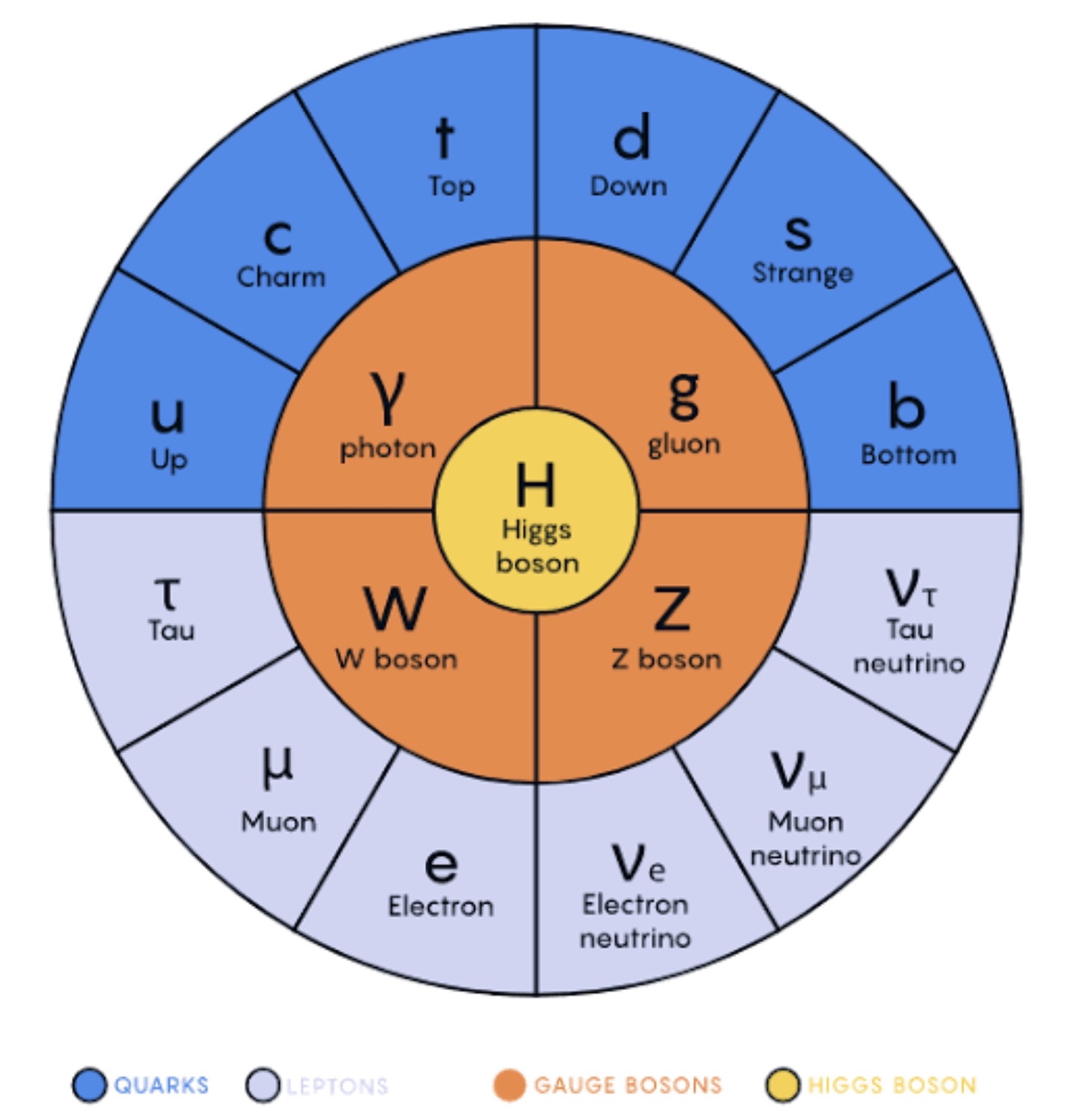
It interprets the universe as a culmination of various combinations of 12 particles and most of the fundamental forces, apart from gravity, and shows how they are bound together by a fascinating particle called the Higgs Boson. One of the main reasons gravity hasn’t been acquainted with this equation is due to the lack of knowledge on how to combine classic and quantum theories.
The existing model comes from quantum theory which states the nature of matter both as a particle and a wave. Various particles of matter combine in varied patterns to create our world.

All particles of matter are called Fermions and those of force is called Bosons. The fermions are the building blocks of matter, they space out and keep apart while the Bosons act as glue. Some of these particles are rare to see as they decay as soon as they form; their discovery should be credited to the advancement of technology that gave us particle accelerators. The 12 particles can be reduced to 4 primary particles which are electrons, the up and down quark. The quarks combine in 2:1 ratios to form the nucleons, later joining with electrons to form an atom. The 4th particle, also known as the ‘Ghost particle’, tends to remain as far from interactions as possible and is called the Neutrino.
The remaining particles are variations of these 4 main particles, displaying similar properties like these elements but varying in mass. The second generation of particles contains muons, the strange quark, the charm quark and muon neutrinos. The third generation involves the Tau, Top quark, Bottom quark and the Tau neutrino. They can be described all together through the Dirac equation.

The force particles,i.e, Bosons present on the standard model are particles of electromagnetism, strong and weak force. These bosons move between fermions to give rise to different types of forces. Another particle included in the 2nd layer is the particle of light called the photon.
Lastly, the most complex of all particles in this model, the Higgs Boson, plays the most important and complex role by endowing all these particles with a mass which determines their change and speed and positions when it encounters any force.
Even though there are some phenomena of the universe that are absent in this equation, the Standard Model has helped us take yet another big step towards discovering a theory that would be able to decipher the biggest riddles of our universe.

Edge computing is a method that places workloads as close to the data as possible; this data is a byproduct of human interactions and tasks. It creates efficiency and minimises the need for data to be processed in a remote data centre. In simpler terms, edge computing is a type of distributed IT network which enables locally produced data to be computed easily through devices such as mobile phones.

It is used for capturing, storing, analyzing, and processing data near the place where it has been generated by relying on sensors, computing devices and machinery to collect said data and feed it to the edge servers or the cloud.

Edge computing includes automation, integrated virtual platforms, real-time analytics, ultra-high-performance network, deployment flexibility and plenty more features. Examples comprise in-hospital patient monitoring, cloud gaming, virtual radio networks and 5G, automated vehicles and such.
The main benefit of implementing edge computing encompasses better fat management, reliable uninterrupted connection, lower connectivity costs with better security practices.
By allowing It to be implemented in automation, edge computing gives rise to many possibilities to analyze data and do conditional monitoring and productive maintenance.
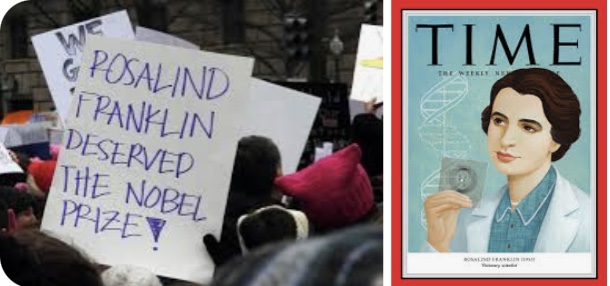

Name: Rosalind Franklin


Date of birth: July 25,1920


Works: Discovered structure of DNA

       Molecular structure of Virus


Nationality:British


Alma mater:Caimbridge University
Referred to as the ‘Dark lady of DNA’, Rosling Franklin was undermined and her work — stolen and plagiarised by her colleagues. She never received any recognition from her field for her contributions to Medical Science.
Gosling was a PhD student working on his PhD under Franklin. He had taken a pic of the double helix structure of the DNA under her guidance. Without her permission, one of her coworkers Maurice Wilkens took the sample and showed it to James Watson who was able to develop a chemical structure of the double helix of DNA.
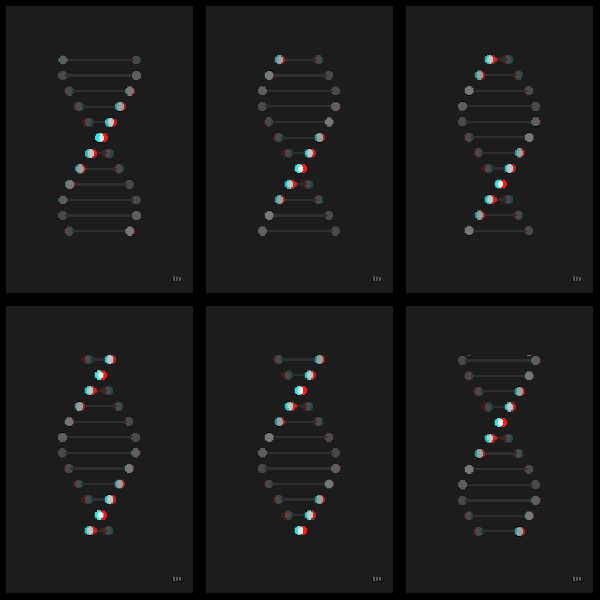
They stole her work and simultaneously published the research work containing the picture and the chemical structure of the same under their names in the ‘Nature’ magazine. They both received Nobel prizes for this accomplishment in Physiology and Medicine. The credit was never offered to Franklin as there are no takebacks for the Nobel Prize.
We all know how important a part DNA plays in the current medical sciences. Many diseases could be cured and even some latest tech is based around DNA like CRISPR.
Unfortunately, this was only the first instance.
Rosalind Franklin had an early death at the young age of 387. Her last project was about the molecular structure of a virus. Due to given circumstances the Nobel Prize and recognition for her work were given to another one of her colleagues.
If she weren’t a victim of her circumstances, Franklin would have been the 2nd woman after Marie Curie to receive two Nobel prizes.
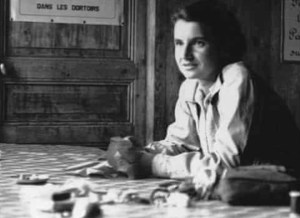
History’s portrayal of women always tend to crush their image in any role except that of a mother, wife, sister or daughter, it has always shown women to be lower than men in any skill, treating them as decorations on sidelines and burying within itself any of those who managed to rise above and beyond. Similar instances are portrayed in ‘A Room Of One’s Own by Virginia Woolf.
Let us keep her in our memory, along with many others who haven’t been recognised by society for their tributes, as they must not be forgotten.
In these hard times, it is difficult to fight the morning inertia or have the willpower to keep following a continuous routine every day, making it seem as though there is no way out of this cycle. But remember, all this hard work will pay off later. Today I have brought some food for your brain- a short set of quotes, songs and shows that motivate me. Read up, listen to some of the songs and then start working towards your goal will a fresh mind.
He who climbs the ladder must begin at the bottom.
Ittetsu Takeda

The future belong to those who believe in the beauty of their dreams.
Haikyuu

However difficult life may seem, there is always something you can do and succeed at.
Stephan Hawking
You could rattle the stars. You could do anything, if you only dared.
- Sarah J. Mass (Throne of Glass)
The best sort of shows to watch for motivation are sports-related shows. They always make you get straight out of bed and onto the work table.
A. Anime

These shows are absolutely terrific. They give you plenty of motivation- woven together with comedy- and make you want to work harder.
B. Study Vlogs
Since the pandemic started, one of the most inspirational things to watch can be study blogs or a study with me. It makes you feel as though you are working with your friends and it helped me feel a little less dystopian in this pandemic.
Music is an amazing source of adrenaline, it pumps you up and makes you believe that you can do anything. I have listed some music I find motivational below but you could just as much listen to workout music or lofi. Anything which makes you want to work harder does the job, doesn’t it?


Nature is a poet
Chaos its muse
They dance in abrupt harmony
Spilling afar, across and through
Painting pastels of reality
Along with specks of neon too
…

A gasp of light
Bubbling through a dark ocean
Dots and dots
Brought by hundreds of motions
Speckles sparkle
Grappled by force
Weighing on the mattress
Making a universal Rose

On the surface
Life seems to function smoothly
Like ducks flying, floating on water
Only at keener observation do we see
It’s continuous paddling to stay afloat
Life in a broader sense
Is like a group of tectonic plates
Coming together and swerving apart
But along its eternal flow
It gives us mountains of opportunity
To harness and reach the top
Every once in a time though
We come across a dry spell
Stranded in a desert – alone
Faith slipping through our hands
Here Mother Nature steps in
To keep us marching on
Providing these hungry eyes
The illusion of an oasis

Recently, I was reading about a particle called the Higgs Boson , it revolutionised quantum science. While doing so I came across a word which I kept reading as the moon for almost 3/4th of the article and then realised the word was muon.

A moon is a macroscopic object — a satellite, a celestial body, whereas a muon is a microscopic object, and an elementary particle like an electron but with a mass 207 times greater. In this article, I will present to you how a tiny invisible particle is related to the ‘Higgs Boson’, the particle which shook my worldview.
A Muon is a type of subatomic particle with a lifetime of only 2.2 microseconds, space is created by the collision of cosmic rays(which are high energy particles and nuclei ) with the atmosphere of the earth. It was initially believed to travel 660m/s through the atmosphere but as it goes under time dilation, we see it love 15 times slower than its actual speed and see it live longer than it’s actual lifetime.
The muon decays into two kinds of neutrinos and an electron, they travel nearly at the speed of light, almost as fast as a photon, and penetrates through a mile to the earth’s crust.
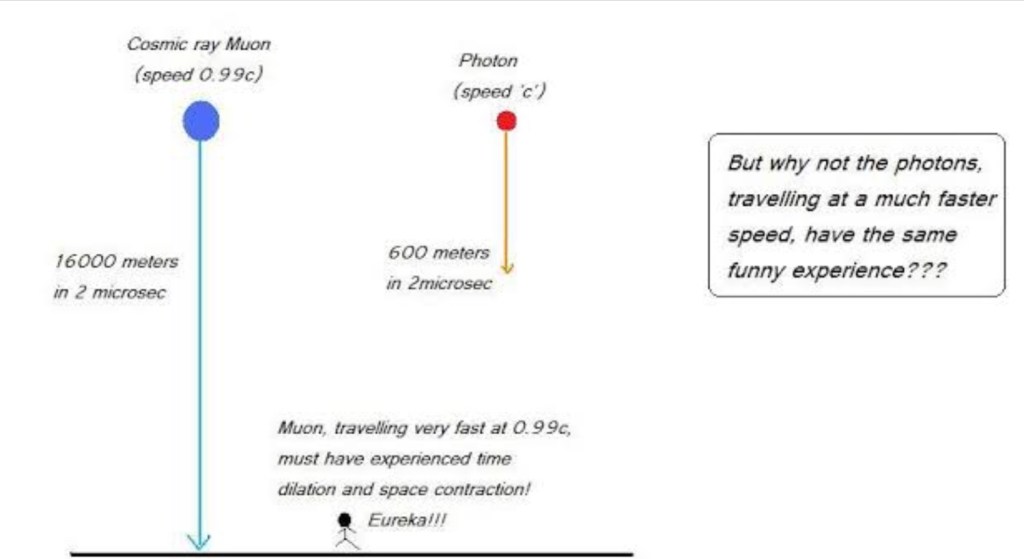
Now, I won’t go any deeper as we are her to talk about it’s implications.
This particle being detected in the Hadron collider led to proof of the existence of a Higgs like particle. The Higgs Boson is a particle without which life – the universe itself couldn’t exist.
You see, initially the universe was hot and dense and the HB was freer, but as the universe cooled down by around 3000K (Kelvin), the particle froze into empty space.
It slows down the speed of most elementary particles, except light as light doesn’t react with it, if the HB didn’t do this then all these particles would travel at the speed of light, atoms wouldn’t even be able to hold together and fall part and thus, anything made of atoms, including us, wouldn’t exist.
FACT:
Weak force (one of the fundamental forces of the universe), was once symmetrical to the Electromagnetic force, but due to the HB it has become a short-ranged force.
It is the only thing between us and….. no us. If it were to suddenly evaporate from the universe, everything would just go boom and start to spontaneously fall apart.
It sounds like it was taken right out of a science fiction novel, doesn’t it?
This discovery wowed the minds of many and sHoOK the field of quantum science as I would like to believe. No surprise that Prof. Higgs got a Nobel prize for it.
That’s all of what’s on my mind as of now. See you next time, byee.
…END…

Suddenly I have silence thrust upon me,
Weary glances
Still, I feel unseen
I am light as a floating ghost spirit
I try to look, watch them
From the periphery of my—
Our eyes interlock
Breakaway;
I sense fission
This newly birthed energy weighs on me
It’s as if I am Atlas
The sky weighs upon me
Tension making my skin bubble
Pain claws into me
But alas,
We both hide our hearts
Shletering behind our logic
Leaving things static.

The month of June is celebrated worldwide as pride month. I wanted to post this article yesterday, but decided against it as pride mustn’t just be celebrated during the month of June and forgotten for the rest of the year. We are going to dive into the depths and talk about a very unrecognised category in the society which is LGBTQ scientists. Let’s begin our discussion by introducing Lynn Conway.

“If you want to change the future, start living as if you were already there.”
-Lynn Conway
The inventor of generalised dynamic instruction handling, Lynn Conway is a computer scientist hailing from America. Her contributions made the possibility of creating a superscalar computer neck reality and even though she was ostracised, her contributions had huge impacts on her fieldwork. She won many awards and was also elected as a member of the National Academy and has worked at institutions such as MIT and IBM, but her journey to the peak was not easily acclaimed.

Born and raised as a boy, she suffered terribly as she had the brain sex and gender identity of a woman. Sadly during her youth, there was no knowledge or discussion about likewise topics. Some even considered talking about such subjects a taboo.
Dr Harry Benjamin MD in 1966, was the first to publish a book about genders called ‘ The Transsexual Phenomenon.’ Due to her circumstances, Lynn even with a strand of support lost her job at IBM. She was treated in an inhumane fashion by people around her and she lived in a constant state of alertness, anxiety and fear from society which at that time had people like her beaten, raped, murdered people and had suffered from all-around brutal treatment and people painted in hatred spewing poisonous phrases.
It takes such courage and determination for those who have suffered from the hatred, ignorance and stigma of society, to talk about their truth and share their experiences so others who have suffered through the same know they aren't alone in this oppression, in this fight and that they have comrades who will stand with them and support them no matter what.
She still waits for a day when gender transition is not something to be pitied about or considered shameful; with today’s advancements in science and technology, people who weren’t correctly gendered at birth have a chance towards a happy life.
Let’s all work towards a more progressive, less oppressive society where people of all cultures, genders and races can live together, openly and without any fear.

Once in a metropolitan city
Lived the most diligent woman you would ever meet
Running through life
With not a second to breathe
Heart empty of envy
Towards those having a driver’s seat to victory
Hands empty of expidiency
Goals in her visibility
As twilight approaches, crawling
Black starts to spill slowly
Of her ever fleeting life
She became an embodiment of ambition
A Queen with triumph
By Rose Singh Bisen
The first time a female scientist was given pay for her work was in 1757 to a woman named Caroline Herschel; her annual salary was £50 {which is equivalent to £6400 at present} for working as an assistant of William Herschel.
To reach above the normal and to achieve what is usually considered impossible, we need the motivation to keep punching ahead. This post aims to do so, following are 10 motivational quotes by female scientists:
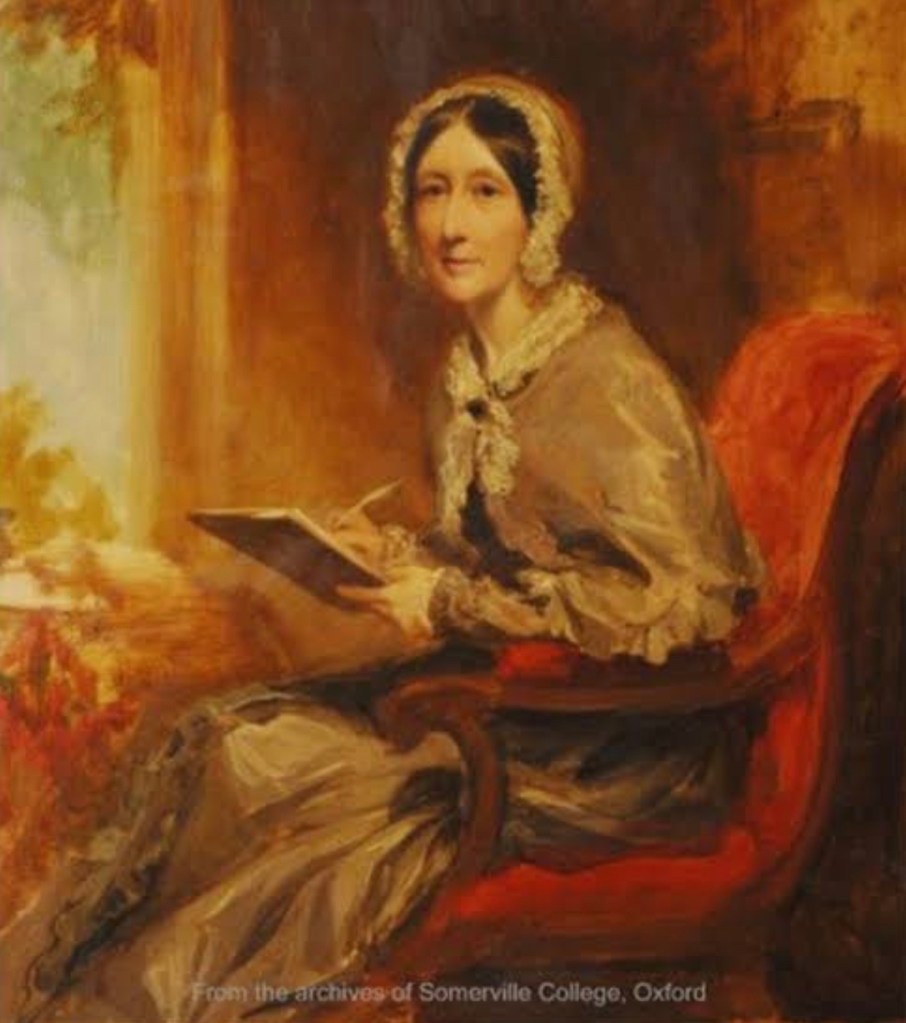
Mary Somerville was a scientist who studied math and astronomy. She was the first female member of the Royal Astronomical Society with Caroline Herschel. She won the Patron’s Medal in 1869 for her proficiency in branches of Science dealing with Physical Geography.
“ No circumstance in the natural world is more inexplainable than the diversity of form and colour of the human race.”
Mary Somerville
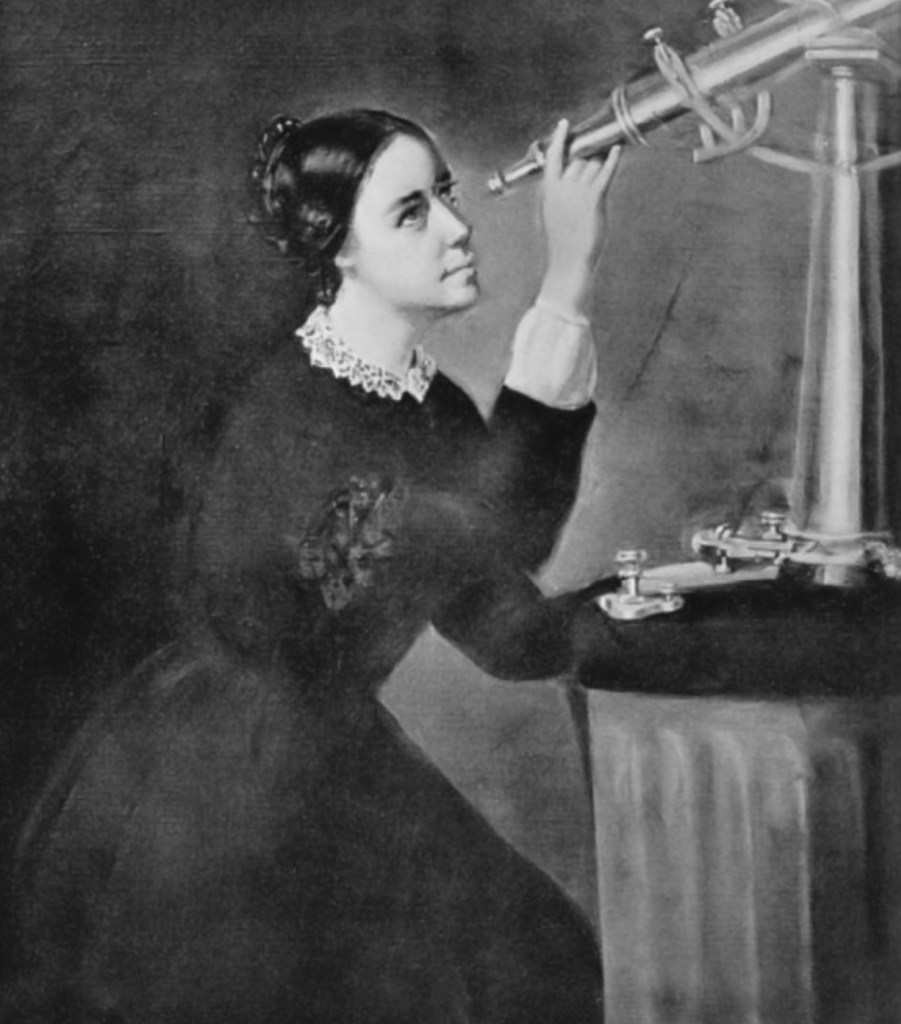
Maria Mitchell was a librarian, a naturalist, and an astronomer. In 1847, she discovered a comet now known as “Miss Mitchell’s Comet” in her honour. She won a gold medal prize for her discovery.
“ Study as if you were going to live forever; live as if you were going to die tomorrow.”
Maria Mitchell

Dr Ajita Chakraborty was a pioneer in women’s advancement in the field of psychiatry in India where she was among the first women to practice this profession. Facing difficulties and refusing better opportunities elsewhere she campaigned for a culturally sensitive form of mental health that would benefit Indian patients.
“My professional life has led me along with a lonely path, with little encouragement from other physicians… But my persistence in evolving my understanding and developing culturally appropriate treatments methods for my Indian patients has been infinitely rewarding!”
Dr Ajita Chakraborty
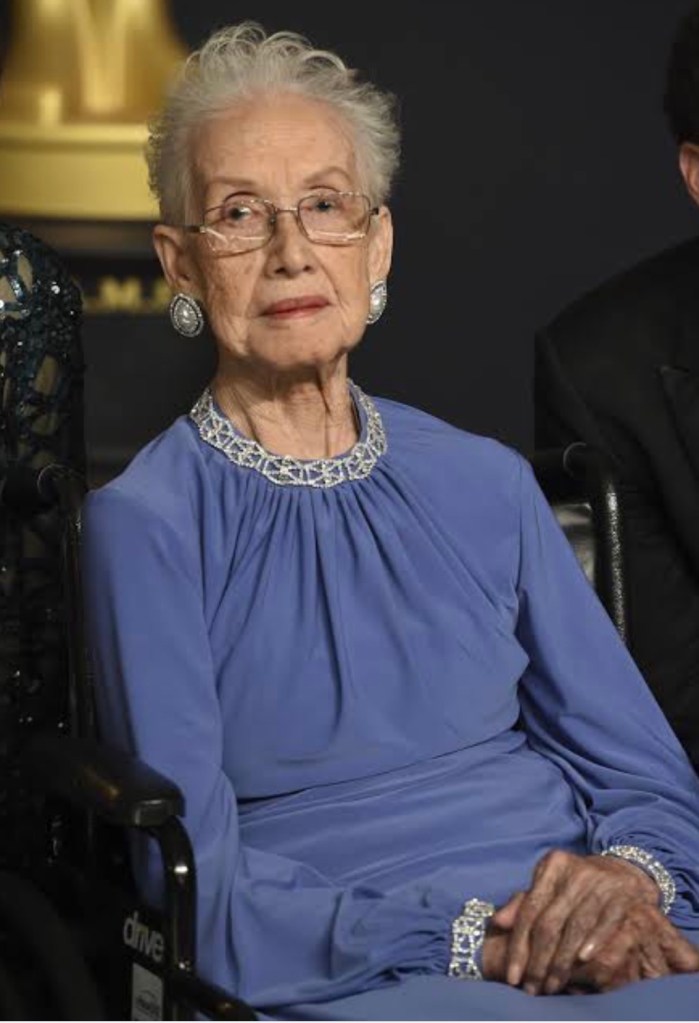
A successor of the women who went unseen for their contributions towards America’s study of space, NASA mathematician Katherine Johnson had a critical role in the success of crewed spaceflights in the US and also calculated trajectories, launch windows and emergency returns for Project mercury space flights.
“You are no better than anyone else, and no one is better then you.”
Katherine Johnson
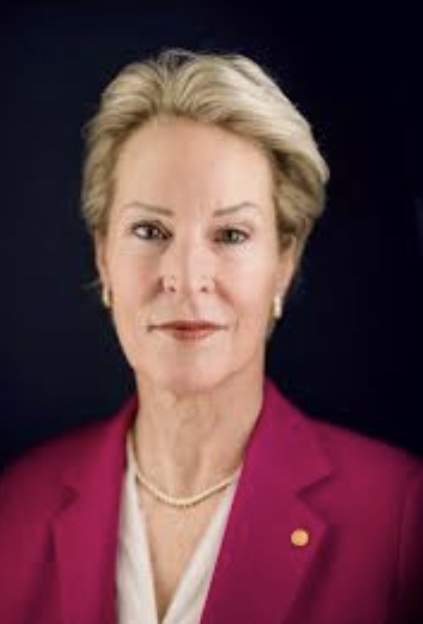
A professor of Chemical Engineering, Bioengineering and Biochemistry at the California Institute of Technology, a chemical engineer and a Nobel Laureate in Chemistry, Frances Arnold is an inspiration to all. She is currently Co-Chair of the President’s Council of Advisors on Science and Technology.
“Most innovations are not obvious to other people at the time. You have to believe in yourself. If you’ve got a good idea, follow it even when others say it’s not.”
Frances Arnold
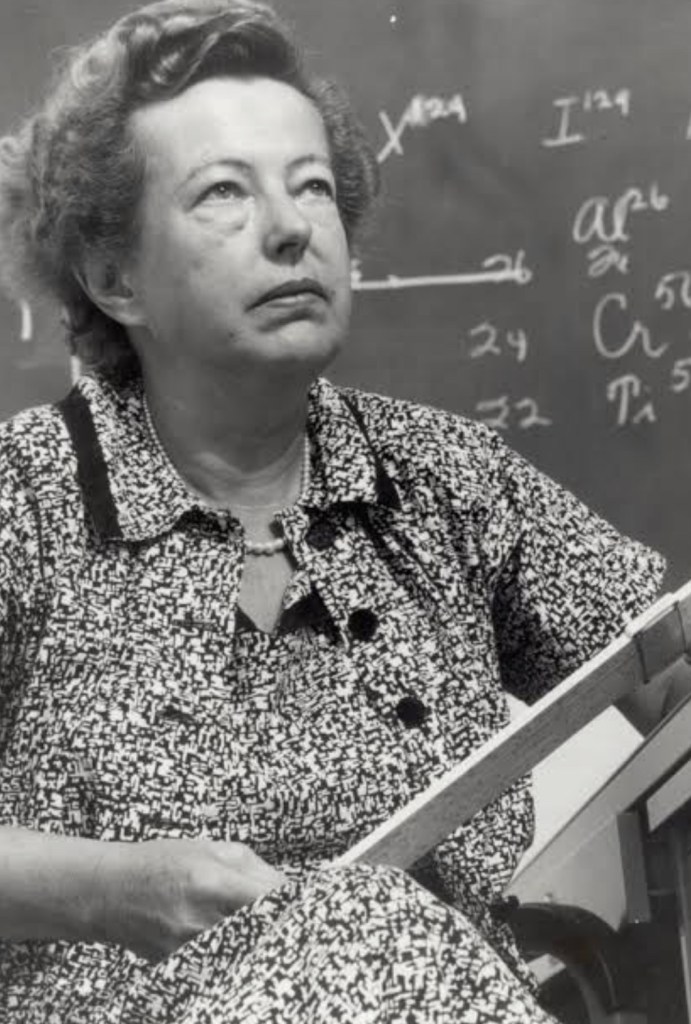
Mentioned fifth on this list is another Nobel Laureate in Physics, second after Marie Curie, for proposing the nuclear shell model on the atomic nucleus. Maria Goeppert-Mayer is a German-born American theoretical physicist.
“Winning the prize isn’t half as exciting as doing the work itself.”
Maria Goeppert-Mayer
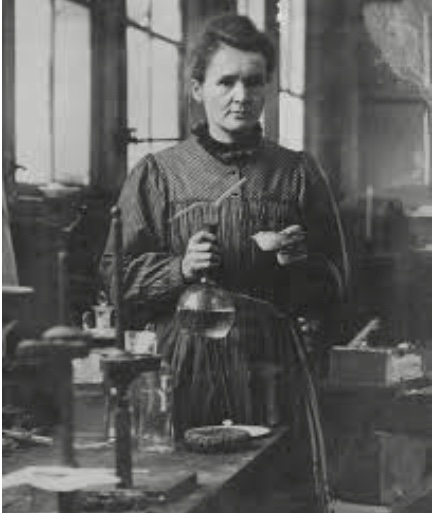
The most famous female scientist, known for her discovery of radioactive elements radium and polonium, and contributions towards finding cancer treatments. Marie Curie was the first women to get a Nobel in Physics.
“You cannot hope to build a world without improving the individuals. To the end, each of us must work for our improvement.”
Marie Curie
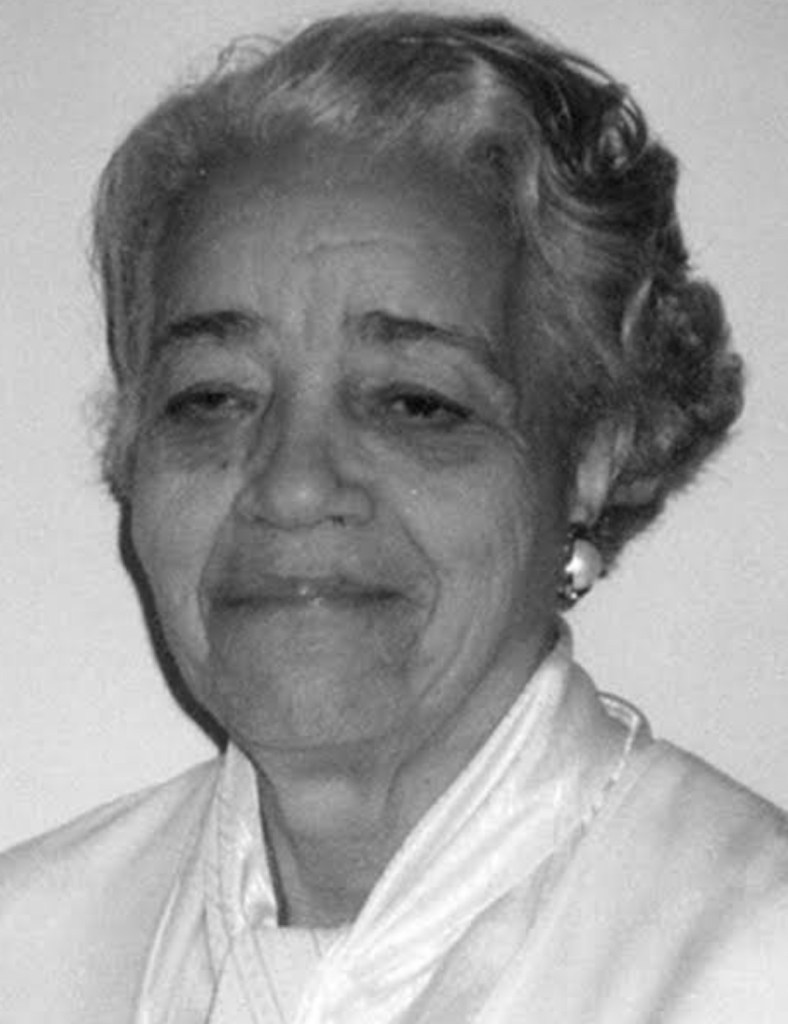
A mathematician and human-computer, Dorothy Vaughan, worked for NASA and the National Advisory Committee for Aeronautics. She was one of the people who paved the way for the currently diverse nature of the workplace. She was NASA’s first African-American manager. She was given the Congressional Gold Medal for her contributions.
“ I changed what I could and what I couldn’t I endured.”
Dorothy Vaughan
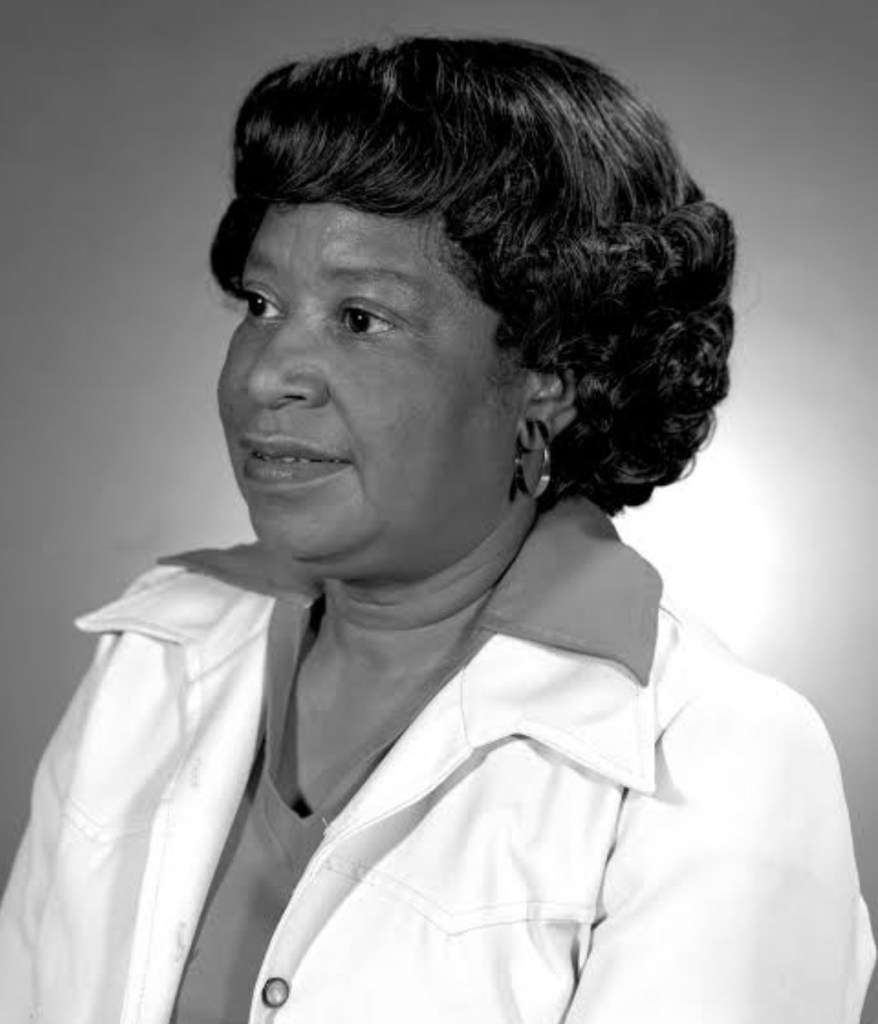
Mary Jackson was an aerospace engineer and a mathematician at the National Advisory Committee for Aeronautics. She became NASA’s first black female engineer working at Langley Research Center in Virginia for most of her career.
“What the devil are you doing? Are you taking a break?”
Mary Jackson
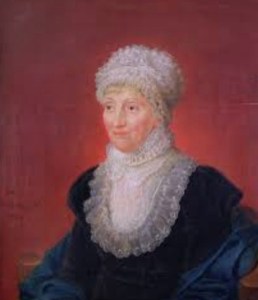
Lastly, the women who inspired the article, Caroline Herschel. She contributed abundantly to astronomy with discoveries of several comets, including the periodic comet 35P which bears her name. She worked as an assistant to her brother William Herschel. She was given the Gold Medal of the Royal Astronomical Society.
“Still, as I can’t do much at the time, I wish to yet to live a little longer, for it is with me, as I suppose it is with everybody; we always have something yet to do.”
Caroline Mitchel
A life spent in the routine of science need not destroy the attractive human element of a women’s nature.
Annie Jump Cannon
Astronomer
She was the first to attempt cataloguing, organizing stars on the bases of their temperatures and spectral types.
Edward Pickering believed that Annie was the only person in the world who could do this work so quickly due to her brilliant understanding of the subject.
She could classify three stars a minute just by looking at their spectral patterns and, if using a magnifying glass, could classify stars down to the ninth magnitude, around 16 times fainter than the human eye can see.
・Classifieds the stars on grounds of Balmer’s absorption lines. The spectral classes were – O, B, A, F, G, K, M
・She became a part of Royal Astronomical society.
・Published a catalogue of stellar spectra, was a made a Curator of Harvard’s Astronomical Photographs.
・Published books to increase the status of astronomy in society.
・Acted as ambassador, brokered partnerships between men. And exchanges of equipment internationally.
Even after facing heavy criticism for being ‘out of place’ and not looking after the house like women do, the Harvard computers worked at the observatory to make significant contributions.
She helped women in astronomy gain acceptance, respect and she paved the way for the future generations of women to come.
She had almost lost her hearing due to scarlet fever and was nearly deaf during most of the length of her career. Cannon was also a member of the National women’s party, a suffragist.
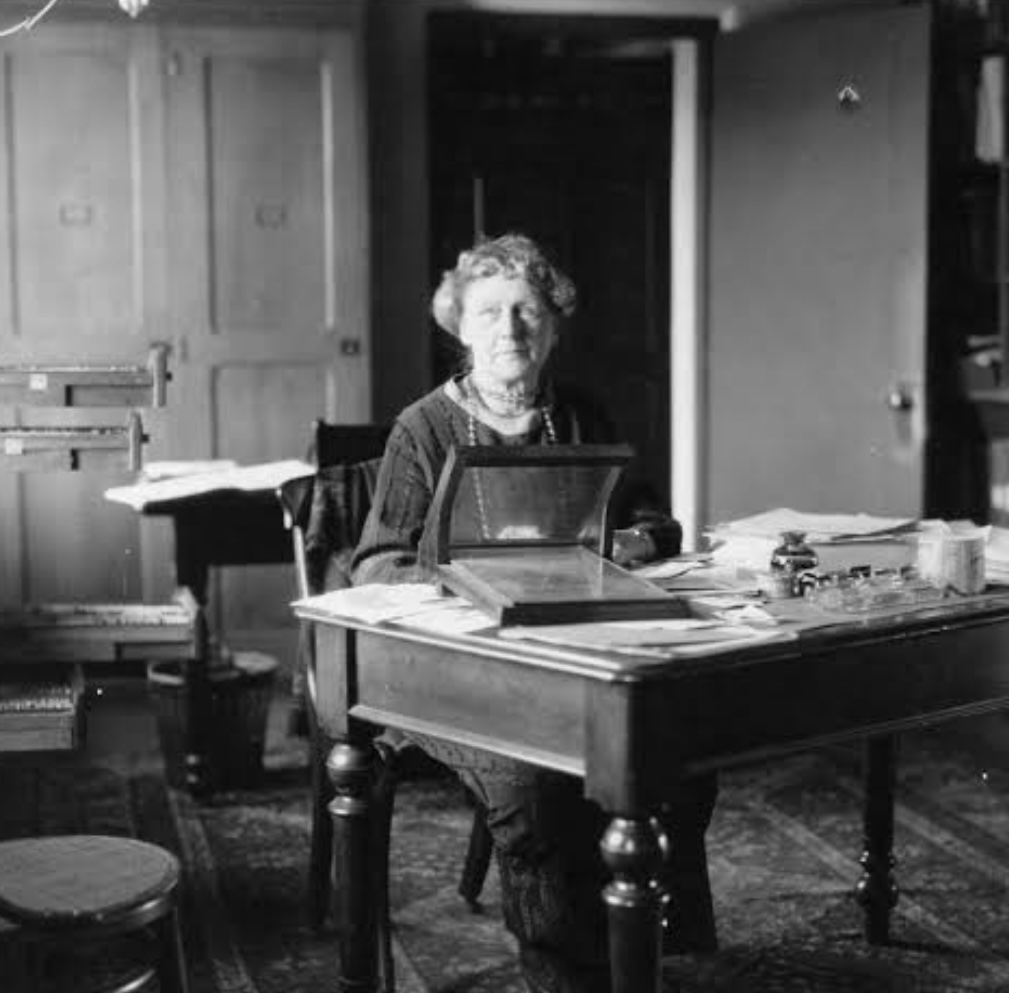
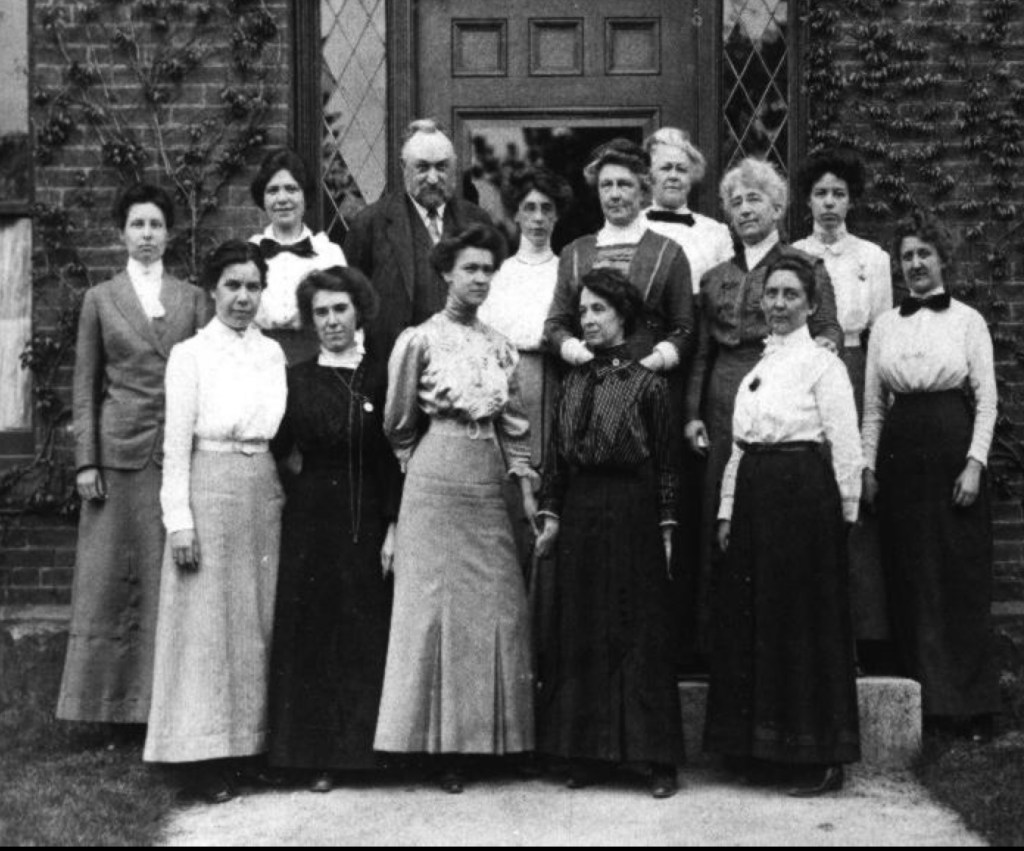
14 billion years ago, the universe was packed up in one single point, scientists call this moment in time The Big Bang. This is a widely accepted theory, which has been postulated due to the assistance of many scientists. One of the major contributors to this discovery, and not given enough credit for it in the present are an association of several dozen women ‘computers’ who laid down the most basic assumptions of astronomy.
At the observatory at Harvard in Massachusetts, there was a team of women skilled in processing astronomical data. Edward Charles Pickering, the director of Harvard College at the time, assembled an organisation of women.
The members would work 6 days a week, calculating temperatures and motion of stars at very low wages. They moulded the emerging field of astrophysics with their spectral analysis of stars, soon they being were recognised as the ‘Harvard computers’. Their efforts created opportunities for women who would work in computers, astrophysics and engineering.

“Pickering’s focus on photography had created a new source material for the ladies, in the form of glass photographic plates. The women worked, usually in pairs, with one partner looking at a plate and speaking aloud her findings to the other, who recorded them in a notebook. The women’s work entailed computing the actual positions and brightness of individual stars by applying mathematical formulae to the nightly notations made by the male observers. With the glass plates, they could discover new stars. Even if they are unsung heroes at present, in their own time they weren’t unsung at all.”
–Dava Sobel
Author of The Glass Universe
Let’s dive into the history behind these amazing women starting with their names. Anna Winlock, Selina Bond, Nettie A. Farrar, Williamina Fleming, Annie Jump Cannon, Antonia Maury, Henrietta Swan Leavitt and Cecilia Payne-Gaposchkin, Mary Anna Palmer Draper, Florence Cushman, Muriel Mussells Seyfert were notable members.
Mathematical astronomer
Anna Winlock’s development in the scientific field and her contributions to the stellar program of the observatory set an example for society, proving that women are equally capable of executing astronomical work.
One of the first members. After the sudden death of her father, Anna Winlock became the breadwinner of the family supporting her mother and 4 siblings. Her father had previously introduced to the principles of mathematical astronomy. She reduced decades worth of observational data which her father had left unfinished. She took part in computing and reducing the Meridian circle observations, collaborated with foreign observatories to prepare a comprehensive star catalogue.
She did arduous work at less than half the prevailing wages of her position.
Astronomer
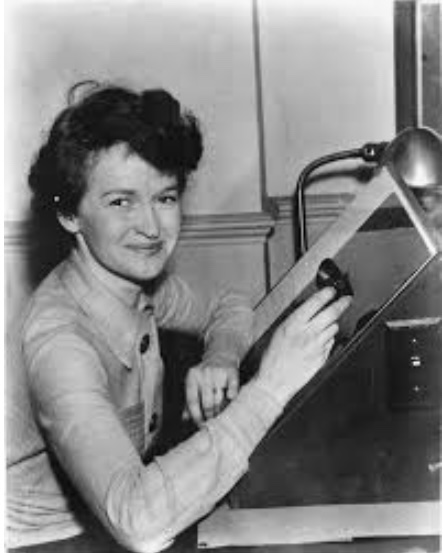
Muriel Elizabeth Mussels Seyfert, a jack of all trades, worked as a Human-computer at the Harvard Observatory.
She discovers three Planetary ( Ring ) nebulae in the Milky way, tremendous rings of stardust a hundred times bigger than our solar system, in the mid-1930s. She made her discovery by examining plates at Harvard’s station in South Africa.
Mussells wasn’t just an amazing astronomer. After her marriage, along with work, she arranged a time for raising two kids and keeping an active art studio. She was also a renowned horse rider- equestrian.
References:
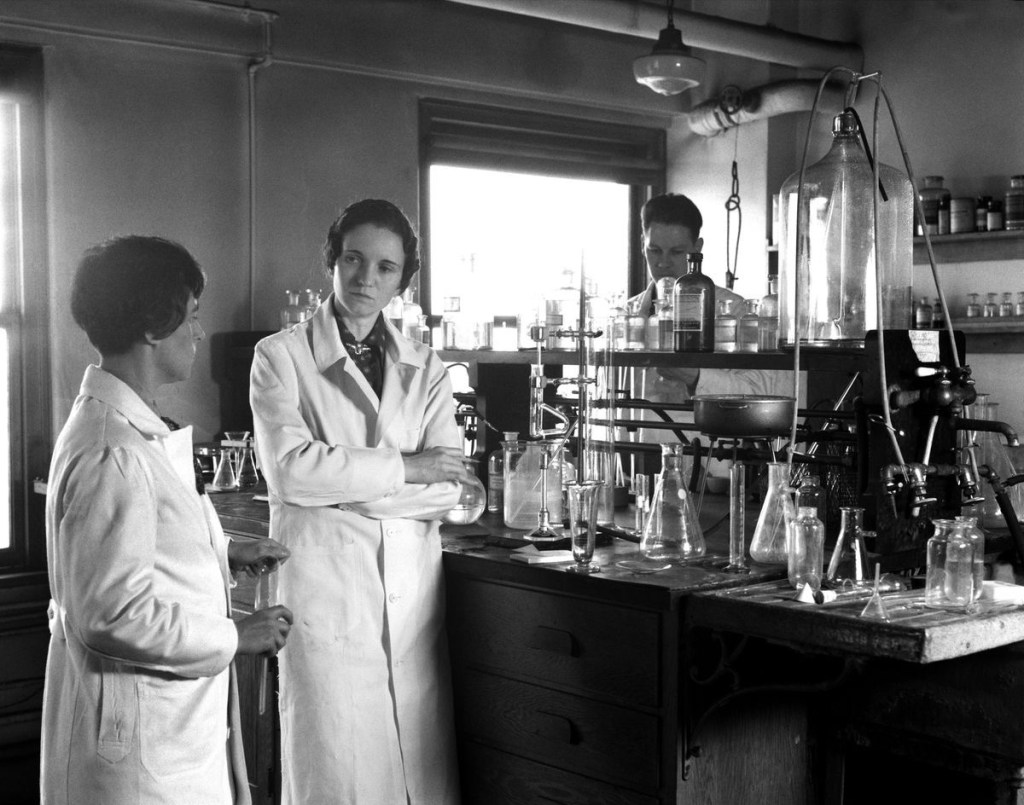
Training for and pursuing a career in science can be treacherous for women; many more begin than ultimately complete at every stage. Characterising this as a pipeline problem however leads to focus on individual women instead of structural conditions.
Enobong Hannah Branch
Did you know if you google the phrase ‘famous scientists’, a list of 51 scientists shows up out of which only 4 were female scientists? This made me curious and question why? I did some research on the topic and found the following information.
Female scientists aren’t perceived favourably compared to their male counterparts. In an article by the New York Times Magazine, it’s mentioned that when professors were presented with a list of imaginary men and women applicants with the same accomplishments, many were more willing to offer a man the job.
Recently I read an article that stated that presently there many scientific disciplines like genetics, biophysics, clinical dentistry etc. in which women outnumber men. But historically, women were at a disadvantage in the scientific field, facing misogyny, discrimination and other prejudices.
In her book ‘ A Room Of One’s Own ’ Virginia Woolf highlights the lack of opportunities for women and their lost potential.
It was then that I found myself walking with extreme rapidity across a grass plot. Instantly a man’s figure rose to intercept me. His face expressed horror and indignation. He was a Beadle; I was a woman. this was their turf; there was the path. Only the Fellows and Scholars are allowed here; the gravel is the place for me. What idea it had been that had sent me so audaciously trespassing I could not now remember.
Virginia Woolf
Many articles can provide you with much more information, I will make sure to link some below. However, that isn’t the objective of this blog. My goal here is to bring attention to female scientists and their contributions in their respective scientific fields throughout history.
This blog is dedicated to the aforementioned reason and also has much more to give, with stories, facts and a whole lot of quotes. This blog is here for anyone who needs motivation or a breakthrough and better themselves. Let’s continue working hard!
Remember: Consistency is the essential.
LINKS:
https://theconversation.com/why-dont-more-women-win-science-nobels-125096

 Through my eyes